
You’ve covered the basics of brand strategy: positioning, messaging, design, tone, content, data, and internal alignment. That puts you ahead of many. However, to move from being credible to being remembered, you need to take it a step further. Strategic clarity and tactical execution are not mutually exclusive; they can coexist effectively. You need both. These five advanced moves will help you tighten the bolts and build a brand that works even when you’re not in the room.
- Embed brand thinking in the buying committee journey.
- Use identity differently.
- Build proof-led stories.
- Align brand and demand.
- Prepare for change.

Embed brand thinking in the buying committee journey.
B2B buying isn’t a single person making a single decision. It’s a group of people, each with different jobs, priorities and objections. Selling to just one role leaves you open to vetoes later.
What to do: Map the key roles in your average deal. This often includes:
- End-user
- Sponsor or champion
- Finance lead
- Procurement
For each one, write down:
- What’s their main question?
- What message helps them say yes?
- What evidence can back it up?
Then link your brand narrative to those proof points. You’re not trying to spin six different stories. You’re building one that holds up from every angle. It needs to show efficiency, reliability, value and ease. Do that, and your brand works 24/7.
Use identity differently.
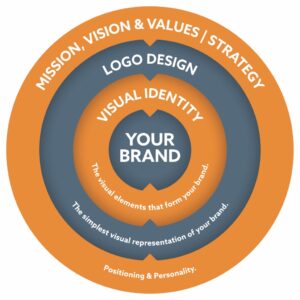
Your identity should do more than make you look nice. It should set you apart in a sea of sameness. Most B2B brands play it safe with identity. That’s the mistake.
What to do:
- Pick one or two brand cues that break category expectations. If everyone else is doing muted tones, add something vivid. If the language is all passive and polite, try something punchier.
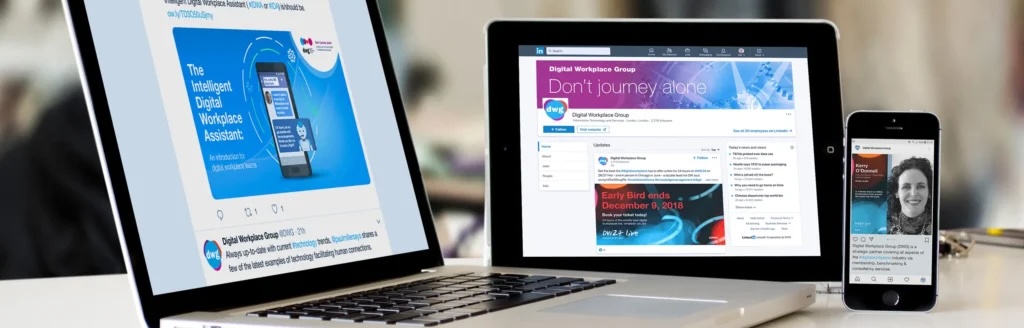
- Apply your tone of voice beyond the homepage. It should be clear in proposals, case studies and even email sign-offs.
- Set up a basic identity system. It doesn’t need to be a 60-page PDF. It just needs to explain how to sound and look consistent across everything.
- Check in with clients. Does the brand still say what it needs to say? If not, tweak it before it drifts too far off course.
Build proof-led stories.
Storytelling is essential, but in B2B, it must be backed by proof. No one buys because you have good intentions. They buy because you delivered results for someone like them.
What to do: Create result-first case studies using this framework:
- The problem (keep it short and real)
- What you did and how you did it
- The outcome (with numbers if possible)
- A quote from the client
Do this across sectors or use-cases. It helps you anchor your value in reality, not waffle.
Align brand and demand.
Marketing teams often split brand and lead gen into two silos. That’s a waste. You want the long game and the short wins working together.
What to do:
- Track brand KPIs (awareness, sentiment) and performance KPIs (pipeline, conversion). You need both to see the whole picture.
- Ensure that every demand campaign accurately reflects your brand promise. If you claim to be easy to work with, your landing page should reflect that in both tone and layout.
- Plan content across the funnel. White papers, thought pieces, and pitch decks should all convey a unified brand identity.
- Review what’s working regularly. That includes brand signals and conversion data. Let insight drive your next move, not opinion.
Prepare for change.
It’s easy to focus on the now. But if your brand doesn’t flex, it won’t last. Tech shifts, buyer habits evolve, and today’s hot topic becomes tomorrow’s “meh”.
What to do:
- Review your brand promise. Is it tied too tightly to one pain point or trend?
- Add resilience to the story. If you lead with cost savings, back it up with messages around scalability, reliability or long-term growth.
- Experiment with new formats. Video case studies, interactive calculators, personalised email content. These are no longer optional.
- Schedule brand reviews every 12 to 18 months. Please don’t wait for a problem to arise before fixing it. Keep it sharp.
Why this matters.
A few years ago, I worked with a mid-sized engineering firm. They had a clean logo, a decent message and a site that ticked the usual boxes. But they were stuck competing on price.
We changed that. We reframed their story around project outcomes, built case studies packed with metrics and gave their identity a sharper edge. In a few months, they were winning more pitches and charging more. They moved from one of many to one of the few.
A brand done well doesn’t just look better. It works harder. And that shift came from applying the five moves above.
Quick checklist.
- Map your buyer roles and what they need to hear
- Refresh your identity with at least one bold new signal
- Structure case studies for proof, not praise
- Align lead gen with your brand strategy
- Make your brand future-ready, not frozen in time
Final thought.
You don’t build a brand to say you have one. You do it to drive growth, like buying a drill. You’re not buying the tool. You’re buying the hole it makes.
Don’t wait, get in touch today.

Written by: Simon
Simon heads up Games & Theory at Toast. He helps people solve problems. From naming and positioning through to conversion and retainment, Simon helps our branding clients grow their businesses.

