
Why brand storytelling only works when it’s grounded in meaning.
- Not everything with a narrative is a story worth telling.
- Why empty storytelling feels hollow.
- Substance should shape the story—not the other way around.
- Meaning builds trust. Noise doesn’t.
- Authenticity isn’t a writing style. It’s a decision.
- When every brand sounds the same, no one stands out.
- How to make sure your storytelling actually means something.
- Final thought.
Not everything with a narrative is a story worth telling.
Brand storytelling has become the default language of marketing. Agencies pitch it. Startups lean into it. Big brands repackage old campaigns with a “story-first” lens. But there’s a problem.
A lot of it doesn’t mean anything.
It’s just structure without substance. And when that happens, the result isn’t engagement. It’s background noise.
“Without substance, brand storytelling turns into noise. Meaning is what makes stories work.”
Why empty storytelling feels hollow.
There’s a difference between a well-told story and a meaningful one. You can follow the structure, hook, conflict, and resolution. You can use all the right language. But if the substance isn’t there, people can feel it.
We see it all the time: A brand talking about “starting in a garage” or “breaking conventions” or “disrupting the industry”. But when you look closer, there’s nothing behind it. No proof. No purpose. Just packaging.
And when everything feels crafted but not lived, the audience disconnects. Because people are good at spotting gloss. It’s time to evolve.
“A well-told brand story is worthless if it isn’t built on something true.”
Substance should shape the story—not the other way around.
Great storytelling isn’t about inventing something that sounds good. It’s about revealing what’s true and important about your brand, and finding the best way to communicate that.
If the foundation is weak, the story falls apart. That’s why storytelling should never come before strategy. If you don’t know who you are, what you stand for, or what you’re building, you don’t have a story. You have a script.
Too many brands start with “what can we say?” instead of “what do we mean?”
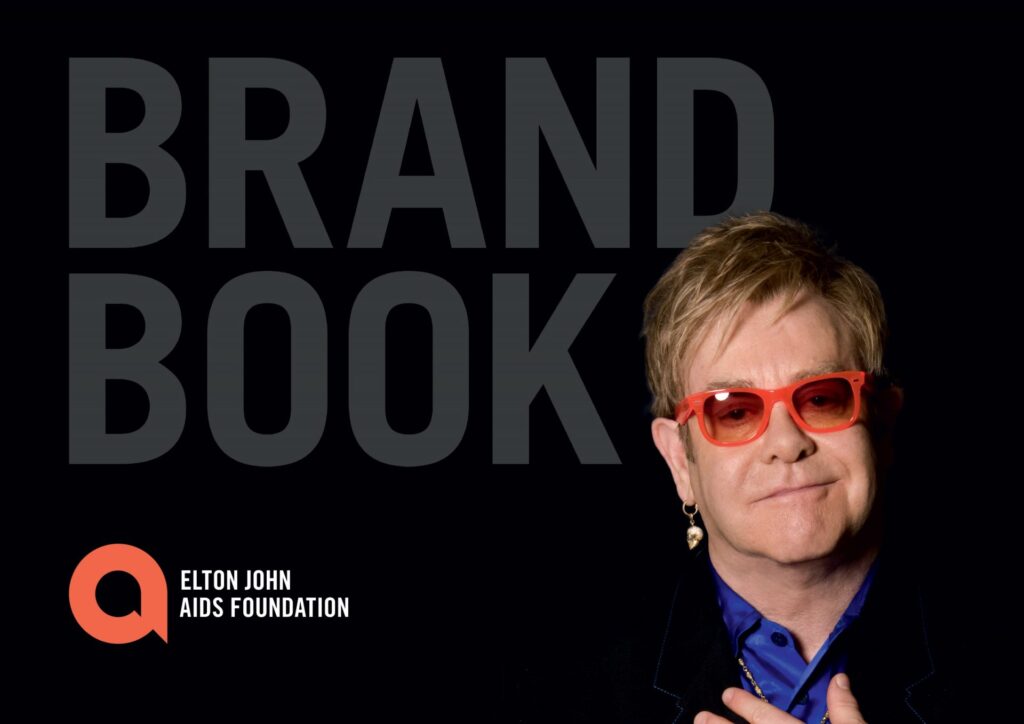
A great example is the work we did with the Elton John AIDS Foundation, creating their brand book as a living, breathing example of their brand guidelines. Facilitating the natural evolution of their brand.
Meaning builds trust. Noise doesn’t.
Substance matters because it’s what makes a brand believable. It’s what makes customers feel something and decide to act on it. It gives your story weight.
- If your brand promises sustainability, what are you actually doing?
- If you talk about community, who are you involving?
- If your values include bravery or boldness, where’s the evidence?
It’s not about being perfect. It’s about showing your story is rooted in real decisions, not just polished words.
Authenticity isn’t a writing style. It’s a decision.
A lot of brands try to sound “authentic”. They strip back the tone. Add a few conversational touches. Mention their team or their story. But authenticity isn’t a writing style. It’s not about the words. It’s about the intent.
An authentic brand story comes from making clear, honest choices and being willing to stand by them. That includes showing your work, owning your flaws, and not hiding behind vague claims.
If your story only exists to attract attention, it will eventually ring false. If it’s backed by action, it earns attention instead.
When every brand sounds the same, no one stands out.
Here’s another issue. Brand storytelling has become so widespread that the same structures and tropes are used over and over again.
- The startup journey.
- The founder’s struggle.
- The turning point.
- The epiphany.
- The mission.
These can all be powerful, but not when copied and pasted. If your story could be applied to five other brands in your sector without changing a single detail, it’s not working.
Substance gives you something others can’t replicate. Your actual values. Your specific way of doing things. The impact you’ve made. This is what makes storytelling a brand asset, not just a branding exercise.
“Customers don’t want crafted narratives; they want real reasons to believe you.”
How to make sure your storytelling actually means something.
If you want your storytelling to cut through, here’s where to start:
Start with strategy.
Clarify what your brand is actually trying to do. Why do you exist? What do you believe? What do you offer that matters?
Find your proof.
Look for actions, behaviours, choices or feedback that show your values in practice. Don’t rely on statements; back them up.
Speak plainly.
You don’t need to make your story sound impressive. You need to make it sound real. That’s where trust is built.
Stay consistent.
Your story shouldn’t shift with every campaign. Build on it. Deepen it. Use it as a foundation, not a launchpad.
Keep it rooted.
Avoid abstract language. Avoid vague ideals. Tie every idea back to something practical or tangible.
Substance doesn’t mean complexity. In fact, the most meaningful brand stories are often the simplest. But they feel grounded. They feel deliberate. And that’s what makes them work.
Final thought.
Telling a story is easy. Building one that matters takes more work.
Brand storytelling only works when it’s backed by substance. When it reflects real choices, real beliefs, and real direction. Without that, it’s just noise, another voice in an already crowded market.
If you’re going to tell a story, make it true. Make it clear. Make it matter.